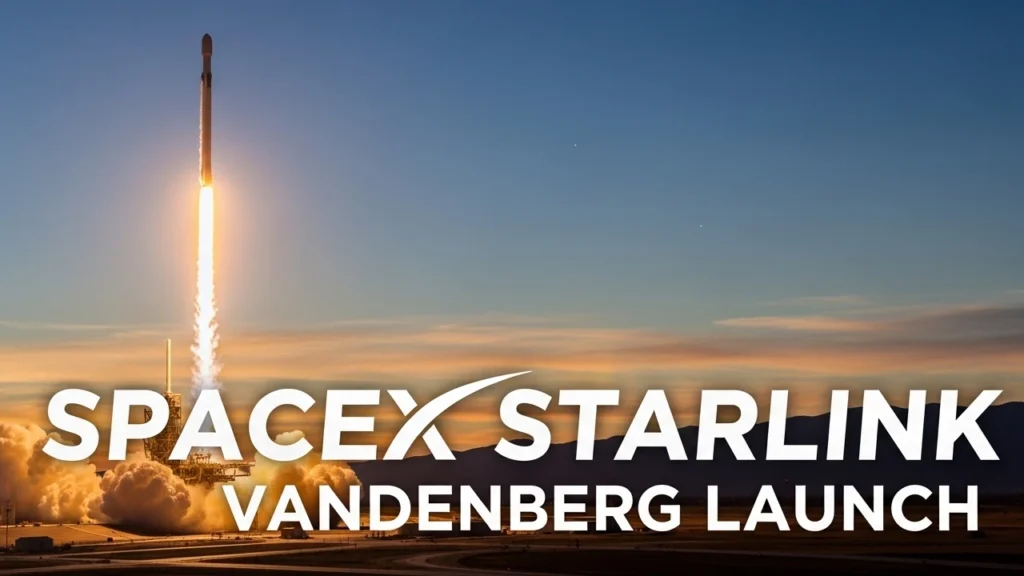
The SpaceX Starlink Vandenberg launch continues to capture global attention as SpaceX expands its satellite internet constellation. With each mission, the company moves closer to providing reliable, high-speed internet coverage across the globe, including remote and underserved regions.
This latest launch from Vandenberg Space Force Base in California highlights SpaceX’s consistent progress in reusable rocket technology and satellite deployment efficiency. In this article, we break down everything you need to know about the mission, its purpose, and its broader impact.
Overview of the SpaceX Starlink Mission
The Starlink program is designed to create a network of thousands of small satellites in low Earth orbit. These satellites work together to deliver internet connectivity to users worldwide.

The Vandenberg launch site plays a key role in deploying satellites into polar orbits, allowing broader global coverage. This specific mission added another batch of satellites to the growing constellation, strengthening network capacity and performance.
Launch Details from Vandenberg
The SpaceX Falcon 9 rocket was used for the Starlink mission, showcasing its reliability and reusability. The rocket lifted off successfully, carrying dozens of Starlink satellites into orbit.
After stage separation, the first stage booster returned safely to Earth, landing on a drone ship in the Pacific Ocean. This reusable technology significantly reduces launch costs and supports frequent missions.
Why Vandenberg Space Force Base Matters
Vandenberg Space Force Base is one of SpaceX’s primary launch sites for missions requiring polar orbits. These trajectories are essential for global satellite coverage, especially for regions near the poles.
Compared to launches from Florida, Vandenberg missions follow a different flight path, allowing satellites to spread more evenly across Earth’s surface. This ensures better internet availability worldwide.
Key Features of Starlink Satellites
Each Starlink satellite is designed with advanced technology to deliver fast and stable internet connections. These satellites operate in low Earth orbit, which reduces latency compared to traditional satellite systems.
They are equipped with solar panels, ion thrusters for positioning, and communication antennas that connect directly with user terminals on the ground.
SpaceX Falcon 9 Rocket
| Specification | Details |
|---|---|
| Rocket Name | Falcon 9 |
| Manufacturer | SpaceX |
| Height | 70 meters |
| Payload Capacity | 22,800 kg to low Earth orbit |
| Reusability | First stage reusable |
| Launch Site | Vandenberg Space Force Base |
Impact of Starlink on Global Internet Access
The Starlink network is transforming internet accessibility by offering high-speed connectivity in areas where traditional infrastructure is limited or unavailable.
From rural communities to maritime and aviation sectors, Starlink provides a reliable solution for staying connected. The growing satellite network improves speed, reduces latency, and increases overall service reliability.
Environmental and Astronomical Considerations
While the expansion of Starlink brings significant benefits, it has also raised concerns among astronomers and environmental experts. The increasing number of satellites can affect night sky visibility and space traffic management.

SpaceX has taken steps to address these concerns by implementing satellite designs that reduce brightness and improve tracking capabilities.
Future Plans for Starlink Launches
SpaceX plans to continue frequent Starlink launches from both Vandenberg and other launch sites. The goal is to expand the constellation to tens of thousands of satellites.
Future upgrades may include improved satellite technology, faster internet speeds, and enhanced coverage for densely populated areas.
Conclusion
The SpaceX Starlink Vandenberg launch represents another important milestone in the evolution of satellite-based internet services. With each successful mission, SpaceX strengthens its global network and moves closer to its goal of providing universal internet access.
As the Starlink constellation grows, users can expect improved performance, wider coverage, and more reliable connectivity, making it a significant development in the world of telecommunications.
Frequently Asked Questions (FAQs)
1. What is the purpose of the SpaceX Starlink Vandenberg launch?
The launch is part of SpaceX’s effort to expand its Starlink satellite network, providing global internet coverage.
2. Why does SpaceX use Vandenberg Space Force Base?
Vandenberg is ideal for polar orbit launches, which help achieve global satellite coverage.
3. How many satellites are launched in one Starlink mission?
Each mission typically carries dozens of satellites, depending on the rocket configuration.
4. What makes Falcon 9 unique?
Falcon 9 is reusable, allowing SpaceX to reduce costs and increase launch frequency.
5. How does Starlink benefit users?
Starlink offers high-speed, low-latency internet, especially useful in remote or underserved areas.


Hi, I’m Anas — the mind behind Business Insider. I started this platform to share my interest in business and finance in a way that’s simple, honest, and actually useful. I enjoy breaking down complex ideas into something anyone can understand, whether it’s about making money, managing it, or growing a business. Through this site, I aim to provide practical insights, real knowledge, and content that genuinely helps people move forward.