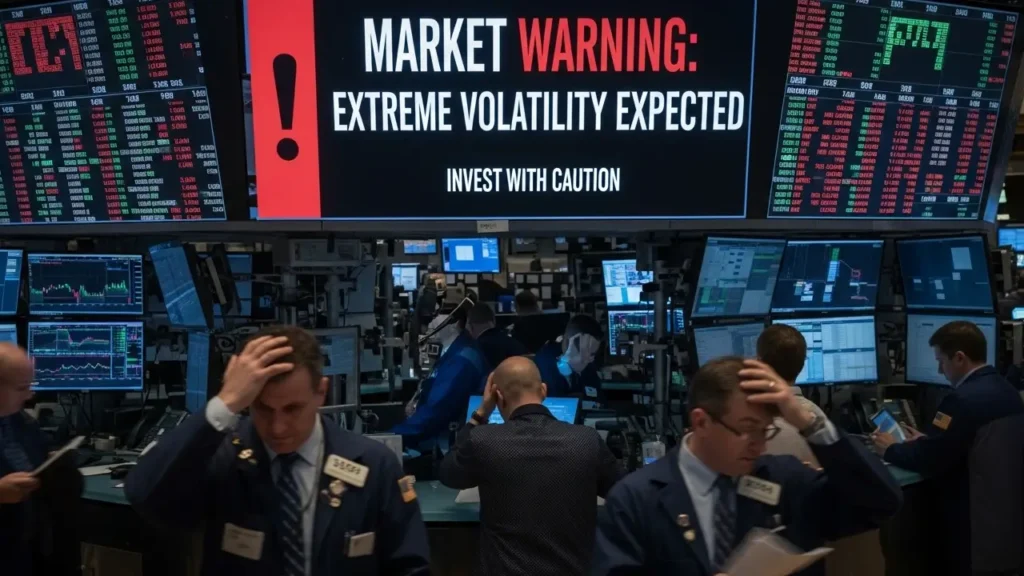
The latest Jerome Powell stock market warning has captured the attention of investors, analysts, and financial experts worldwide. As the Chairman of the Federal Reserve, Powell’s statements often influence global markets, interest rate expectations, and investor sentiment.
In recent remarks highlighted key economic risks, including inflation pressures, market volatility, and uncertainty in monetary policy. These warnings are not meant to create panic but to encourage careful financial planning and realistic expectations in an evolving economic environment.
Why Jerome Powell Issued a Stock Market Warning
The Federal Reserve plays a critical role in maintaining economic stability. Powell’s warning comes amid ongoing concerns about inflation, global economic slowdown, and tightening financial conditions.

One of the main reasons behind the Jerome Powell stock market warning is the possibility that markets may be overestimating how quickly interest rates could fall. If inflation remains persistent, the Federal Reserve may need to keep rates higher for longer than expected.
Impact of Interest Rates on the Stock Market
Interest rates directly affect stock market performance. When rates rise, borrowing becomes more expensive, reducing business expansion and consumer spending. This often leads to slower economic growth.
Powell emphasized that investors should not assume easy monetary policy will return quickly. This message serves as a reminder that market conditions may remain tight and unpredictable in the near term.
Key Concerns Highlighted by Jerome Powell
The Jerome Powell stock market warning focuses on several critical factors that investors should monitor closely:
Inflation Persistence: Inflation may take longer to stabilize, which could delay interest rate cuts.
Market Volatility: Stock prices may experience sudden fluctuations due to economic data and policy changes.
Global Economic Risks: External factors such as geopolitical tensions and slowing global growth can impact U.S. markets.
How Investors Are Reacting to the Warning
Following Powell’s remarks, investors have shown mixed reactions. Some are becoming more cautious, shifting toward safer assets, while others see opportunities in market corrections.
Institutional investors are particularly focused on long-term strategies rather than short-term gains. This shift reflects growing awareness that the current economic cycle may require patience and disciplined investing.
What This Means for Long-Term Investors
For long-term investors, the Jerome Powell stock market warning serves as a reminder to stay focused on fundamentals rather than reacting emotionally to market swings.
Diversification, risk management, and consistent investment strategies remain essential. While short-term volatility may increase, long-term growth opportunities still exist in strong sectors and resilient companies.
Short-Term Market Outlook After the Warning
In the short term, markets may experience uncertainty as investors adjust expectations around interest rates and economic growth.
Powell’s cautious tone suggests that quick market recoveries are not guaranteed. Instead, gradual adjustments and data-driven movements are more likely.

Expert Analysis on Jerome Powell’s Statement
Financial experts generally agree that Powell’s warning is a realistic assessment rather than a negative signal. It reflects a balanced approach to managing inflation while supporting economic stability.
Analysts emphasize that such warnings are part of responsible central banking. They help prevent excessive risk-taking and encourage more informed investment decisions.
Overview of Key Economic Indicators
| Indicator | Current Trend | Impact on Market | Investor Insight |
|---|---|---|---|
| Interest Rates | Elevated | ضغط على الأسهم | Focus on stable sectors |
| Inflation | Moderate but persistent | Uncertainty in policy | Monitor Fed updates |
| Economic Growth | Slowing | Mixed market performance | Diversify investments |
| Market Volatility | Increasing | Frequent fluctuations | Avoid panic selling |
Smart Strategies for Investors Right Now
In light of the Jerome Powell stock market warning, investors should consider practical strategies to navigate uncertainty.
Maintaining a diversified portfolio across sectors can reduce risk. Additionally, focusing on fundamentally strong companies with stable earnings can provide more resilience during market fluctuations.
Should You Be Concerned About the Warning?
While the warning highlights potential risks, it does not necessarily indicate a market crash. Instead, it signals a period of adjustment and cautious optimism.
Investors who stay informed, avoid emotional decisions, and follow disciplined strategies are better positioned to manage uncertainty effectively.
Conclusion: Understanding the Bigger Picture
The Jerome Powell stock market warning is an important reminder that financial markets operate within broader economic conditions. Interest rates, inflation, and global events all play a role in shaping market trends.
Rather than reacting to short-term signals, investors should focus on long-term goals, informed decision-making, and risk management. Powell’s message ultimately encourages a balanced and realistic approach to investing.
FAQs
1. What is the Jerome Powell stock market warning?
It refers to recent statements by the Federal Reserve Chairman highlighting risks such as inflation and market volatility.
2. Why did Jerome Powell issue this warning?
He aims to caution investors about economic uncertainties and prevent unrealistic expectations about interest rate cuts.
3. Will the stock market crash after this warning?
There is no confirmation of a crash. The warning suggests caution, not panic.
4. How should investors respond?
Investors should focus on diversification, long-term strategies, and careful risk management.
5. Is this a good time to invest?
Investment decisions depend on individual goals, but long-term opportunities still exist despite short-term uncertainty.


Hi, I’m Anas — the mind behind Business Insider. I started this platform to share my interest in business and finance in a way that’s simple, honest, and actually useful. I enjoy breaking down complex ideas into something anyone can understand, whether it’s about making money, managing it, or growing a business. Through this site, I aim to provide practical insights, real knowledge, and content that genuinely helps people move forward.